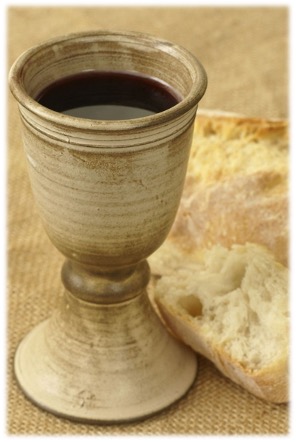
Luke 22:19 And he took bread, and gave thanks, and brake it, and gave unto them, saying, This is my body which is given for you: this do in remembrance of me.
What is the THIS that we should be doing?
John 13:12So after he had washed their feet, and had taken his garments, and was set down again, he said unto them, Know ye what I have done to you? 13Ye call me Master and Lord: and ye say well; for so I am. 14If I then, your Lord and Master, have washed your feet; ye also ought to wash one another’s feet. 15For I have given you an example, that ye should do as I have done to you.
The example Jesus is making here sounds a lot like the new commandment he gave to us:
John 13:34A new commandment I give unto you, That ye love one another; as I have loved you, that ye also love one another.
Jesus was not saying we should wash another’s feet. It was about doing unto others as he has done unto us. As he said in verse 15, this was an example of the things he was about to do for them, and for us. And what was it that he was about to do for them?
Luke 22:19 And he took bread, and gave thanks, and brake it, and gave unto them, saying, This is my body which is given for you: this do in remembrance of me.
We must ask the question: When Jesus said, “this do,” was he talking about the partaking of his broken body? Or was he saying that we should offer our broken body to one another? After all, we are the body of Christ. Again, he started out by saying that we should follow his lead: what he has done for us, we should do for one another.
1 Corinthians 11:1 Be ye followers of me, even as I also am of Christ. 2 Now I praise you, brethren, that ye remember me in all things, and keep the ordinances, as I delivered them to you,
1 Corinthians 11 is the chapter most quoted during communion. In this chapter Paul mentions a number of items: partaking worthily, self-examination, discerning the Lord’s body, consequences of partaking unworthily, remembrance, and shewing the Lord’s death. Each of these items is relevant to the understanding of communion: each helps explain the pattern set before us that we are to follow.
1 Corinthians 11:23 For I have received of the Lord that which also I delivered unto you…
Just as Jesus, at the beginning of the Last Supper, commanded that we should do unto one another as the Lord has done for us, so Paul delivers unto us what he has received from the Lord.
1 Corinthians 11:18 For first of all, when ye come together in the church, I hear that there be divisions among you; and I partly believe it.
Paul’s discourse was in reaction to the divisions he saw within the church. This context is key to understanding Paul’s explanation of communion. The underlying purpose of communion is to bring about unity in the body, to end the divisions.
Partaking Unworthily – What it is not
1 Corinthians 11:27 Wherefore whosoever shall eat this bread, and drink this cup of the Lord, unworthily, shall be guilty of the body and blood of the Lord.
There is a dramatic distinction between being worthy to take communion, and taking communion in a worthy manner.
Unworthily is an adverb, not an adjective. Adjectives act upon a noun; adverbs act upon a verb or another adverb. As an adjective it would refer to the person: is the person worthy to take communion? As an adverb it refers to the partaking, the act of eating the bread and drinking the wine. It is the method in which we take communion that must done worthily. When we interpret worthily as an adjective we tend to (or pretend to) prepare ourselves for communion by confessing our sins and asking forgiveness in an attempt to become worthy. But the worthily has nothing to do with the person, and everything to do with the partaking. The danger here is that our preparation consists of judging our worthiness to receive communion. At that point we, being worthy, are about to partake unworthily, subjecting ourselves to the adverse consequences.
Having discussed what it is not to partake worthily, continue on to find out what it means to partake worthily.
Partaking Worthily
1 Corinthians 11:28But let a man examine himself, and so let him eat of that bread, and drink of that cup. 29For he that eateth and drinketh unworthily, eateth and drinketh damnation to himself, not discerning <diakrino> the Lord’s body. 30For this cause many are weak and sickly among you, and many sleep. 31For if we would judge < diakrino > ourselves, we should not be judged.
So how does one partake worthily? Self-examination is the answer. This concept is developed further by the verses following. The tricky part is when you get to verse 29. If that verse is bundled as a complete thought, one could reasonably conclude that the damnation is for not discerning the Lord’s body. Try as we might, we do not really understand what Paul is talking about, “discerning the Lord’s body.” But whatever it is, we do understand that it is serious, and misunderstanding could be consequential.
The trick is that the second part of verse 29 does not refer to the damnation due to eating and drinking unworthily, but it refers to the self-examination, or lack thereof. If you read the verses highlighted in green, skipping the text in between, the meaning becomes crystal clear, and then we know exactly what it means to “discern” the Lord’s body. The word translated discern is the same Greek word translated judge in verse 31. A clear rendering of this would be: Examine yourself, not judging the body of Christ, for if you judge yourself, you would not be judged. “Discerning” the body of Christ is being warned against. Judging the body of Christ has consequences.
Consequences
Matthew 7:1 Judge not that ye be not judged. 2 For with what judgment ye judge, ye shall be judged, and with what measure ye mete, it shall be measured to you again.
The consequences of partaking unworthily are in proportion to the harshness of our judgment of others. It is not true that all bad things that happen are the result of judging others, but when we judge others harshly we will find ourselves at the reaping end sooner or later.
These consequences are heightened by receiving communion, because, by taking the elements, we are remembering what Jesus did for us, then turning around and not delivering to others what we have received from him – bad karma.
More details are found in The Case for Mercy.
Remembering
As we examine ourselves, think of the divisions in the local body of Christ, specifically the people who hurt us; hurt me. Perhaps someone betrayed me. How long am I going to hold onto that hurt? And how long until I let go of that betrayal? How long is the right length of time to brood?
1 Corinthians 11:23 That the Lord Jesus the SAME NIGHT in which he was betrayed took bread: 24And when he had given thanks, he brake it, and said, Take, eat: this is my body, which is broken for you: this do in remembrance of me.
Not the Victim
Philippians 2:5 Let this mind be in you, which was also in Christ Jesus: 6 Who, being in the form of God, thought it not robbery to be equal with God: 7 But made himself of no reputation, and took upon him the form of a servant, and was made in the likeness of men: 8 And being found in fashion as a man, he humbled himself, and became obedient unto death, even the death of the cross.
Typically, when we look at this verse, we wonder how Jesus might consider himself a thief, being in the form of God. This is missing the point. The point is, he had everything, and lost everything, yet he did not consider himself the victim of a robbery. Rather, he humbled himself.
Paul said that we should be like-minded. We are not the victim and should not be thus-minded.
Showing the Lord’s Death
1 Corinthians 11:26 For as often as ye eat this bread and drink this cup, ye do shew <kataggello> the Lord’s death till he come.
So how do we show the Lord’s death? The Greek word contains the word, angel. This word is more often than not translated, preach. The idea is that of a messenger, delivering the message that he has received. In this case the message is more than words.
When we take communion, we receive the body of the Lord, broken for us. In turn we deliver this message to one another: this is my body, broken for you. I let go of all the hurts and betrayals.
We receive the cup, the Lord’s blood poured out for us. Again we deliver what we have received. This is my willingness to drink of the cup prepared by my Father for me.
Taking communion unworthily is receiving from the Lord, but not following through on the delivery, even to our enemies. For we offered his body for us when we were yet his enemies.
When we take communion worthily, we demonstrate the Lord’s death by passing on to others what we ourselves have received, remembering to deliver our body, broken, with the same spirit in which Christ’s body was broken for us.
It would seem unreasonable to actually die for someone, as Jesus did for us. Paul help us here.
Romans 12:1 I beseech you therefore, brethren, by the mercies of God, that ye present your bodies a living sacrifice, holy, acceptable unto God, which is your reasonable service.
 New Wine