1What shall we say then? Shall we continue in sin, that grace may abound? 2God forbid. How shall we, that are dead to sin, live any longer therein? 3Know ye not, that so many of us as were baptized into Jesus Christ were baptized into his death? 4Therefore we are buried with him by baptism into death: that like as Christ was raised up from the dead by the glory of the Father, even so we also should walk in newness of life. 5For if we have been planted together in the likeness of his death, we shall be also in the likeness of his resurrection: 6Knowing this, that our old man is crucified with him, that the body of sin might be destroyed, that henceforth we should not serve sin. 7For he that is dead is freed from sin. 8Now if we be dead with Christ, we believe that we shall also live with him: 9Knowing that Christ being raised from the dead dieth no more; death hath no more dominion over him. 10For in that he died, he died unto sin once: but in that he liveth, he liveth unto God. 11Likewise reckon ye also yourselves to be dead indeed unto sin, but alive unto God through Jesus Christ our Lord. 12Let not sin therefore reign in your mortal body, that ye should obey it in the lusts thereof. 13Neither yield ye your members as instruments of unrighteousness unto sin: but yield yourselves unto God, as those that are alive from the dead, and your members as instruments of righteousness unto God. 14For sin shall not have dominion over you: for ye are not under the law, but under grace. 15What then? shall we sin, because we are not under the law, but under grace? God forbid. 16Know ye not, that to whom ye yield yourselves servants to obey, his servants ye are to whom ye obey; whether of sin unto death, or of obedience unto righteousness? 17But God be thanked, that ye were the servants of sin, but ye have obeyed from the heart that form of doctrine which was delivered you. 18Being then made free from sin, ye became the servants of righteousness. 19I speak after the manner of men because of the infirmity of your flesh: for as ye have yielded your members servants to uncleanness and to iniquity unto iniquity; even so now yield your members servants to righteousness unto holiness. 20For when ye were the servants of sin, ye were free from righteousness. 21What fruit had ye then in those things whereof ye are now ashamed? for the end of those things is death. 22But now being made free from sin, and become servants to God, ye have your fruit unto holiness, and the end everlasting life. 23For the wages of sin is death; but the gift of God is eternal life through Jesus Christ our Lord.
Romans 6 is the first chapter I memorized in 1983. This is the chapter that changed my life forever, even though I did not understand a word of it. That tells me that the scriptures are not only informative; they are transformative.
The first verse puzzled me for forty years. I could not think of a single way to look at grace whereby continuing is sin would seem like a good idea, and how it would cause grace to abound.
“What shall we say then” is almost like a therefore: it is like a natural conclusion drawn from what came before.
Romans 5:20But where sin abounded, grace did much more abound.
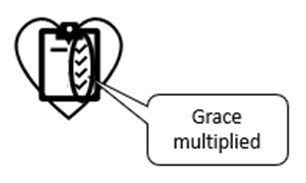
This is how grace abounds more than sin: each time grace is received, it has an opportunity to multiply. When I sin, I receive mercy: that is grace in the form of forgiveness. To retain that forgiveness, I need an opportunity to forgive someone else as I have been forgiven.
It is God who will provide the opportunities. He will find someone else to offend you in the same way you offended him. You must realize that in that you have done it to the least of these, you have done it unto me. The real problem is that you will be given many opportunities to extend this mercy to others.
The good news is that you can accumulate grace very quickly in this way, getting a talent for each offense. The trouble is that what you sow is what you will also reap. God is not mocked. Once you have sown your garden with many varieties of seeds, there will come a time of harvest. You may very well be overwhelmed by the offenses against you by others.
In addition, your testimony will suffer greatly. This is not the kind of grace you want in your account. And this is how we are held accountable even though our sins are remembered no more.
Romans 6:3Know ye not, that so many of us as were baptized into Jesus Christ were baptized into his death?
As the first verse refers to the end of the previous chapter, this verse refers to the beginning of the next chapter.
Romans 7:1Know ye not, brethren, (for I speak to them that know the law,) how that the law hath dominion over a man as long as he liveth?
Both verses begin with Know ye not. Romans 6:3 associates baptism with death, and death is what releases us from the law – the law of sin and death. Baptism is a shadow of death, a concept made famous by Psalm 24 – yea though I walk through the valley of the shadow of death, I will fear no evil, for thou art with me.
Once you walk through the valley of the shadow of death, God is with you. When you hear someone say, prepare to meet your maker, you are saying prepare to die. In baptism, you get to meet your maker – God with you.
One need not be baptized to be “saved”, but you do need to die to be delivered from the law. Baptism is one way that suffices for death, delivering out from under the law.
Mark 16:16He that believeth and is baptized shall be saved;
This verse does not say that baptism is a requirement. Baptism is not necessary, but it is sufficient. In first Peter 3, where it says that baptism saved them, baptism saved them. They walked through the valley of the shadow of death and were delivered from the law of sin and death. Baptism is not the only shadow of death, but it is one.
It is interesting to step back and see the bigger picture. Let’s diagram the full context of baptism, and why Jesus told John the Baptist that it was necessary for him to baptize Jesus.
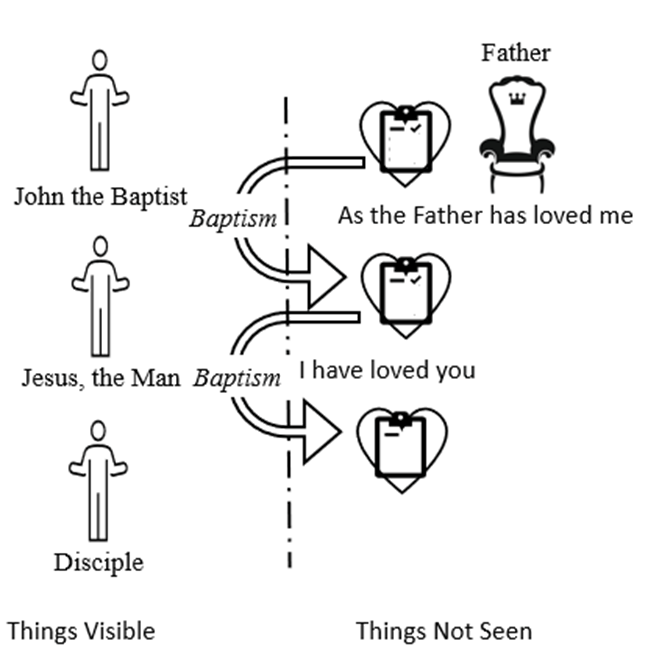
Even when God the Father loved Jesus, he worked through others. He used Mary to conceive Jesus. He used Mary Magdalene to wash his feet. Here he used John the Baptist to baptize Jesus. Unless he had done this, Jesus would not have been able to baptize others into his death, delivering them from the law of sin and death.
Baptism is not just symbolic; it satisfies a necessary step of faith for salvation. There are other ways to take this step, but baptism is the way I strongly recommend: it comes packaged with resurrection.
This brings up other issues. Baptism should not be postponed in the interest of determining whether the person’s commitment was genuine. This is a step that should be taken as soon as possible. The new heart cannot be received until the person is delivered from the law, otherwise sins would be written on the new heart. Not good.
The other issue is that the qualifications for baptizing others: if you have been baptized by someone else, you are qualified to baptize others. The Great Commission includes the order to baptize others. Provide opportunity for others to fulfill the righteousness of the law.
Romans 6:13Neither yield ye your members as instruments of unrighteousness unto sin: but yield yourselves unto God, as those that are alive from the dead, and your members as instruments of righteousness unto God.
This verse establishes the concept of God using our members, our resources, as instruments of righteousness. When that happens, he is doing the work using our resources. This is the concept of God and me working together. My resources are instruments of righteousness because the result of us working together is righteousness: God’s strength, my resources, his purpose, credited to my account.
Romans 6: 14For sin shall not have dominion over you: for ye are not under the law, but under grace.
What does it mean to be under grace? I have characterized grace as being the law and the fulfillment of the law. But it is also the system of governance; the New Commandment, grace being the preeminent element. Amazing.
Romans 6:17But God be thanked, that ye were the servants of sin, but ye have obeyed from the heart that form of doctrine which was delivered you.
Obeying from the heart is obedience to the laws of grace that were written on your heart. The form of doctrine is the specific laws written upon your heart, the specific ways in which you have been loved. These laws were delivered to you when you received the love of Christ through another.
Romans 6:19I speak after the manner of men because of the infirmity of your flesh: for as ye have yielded your members servants to uncleanness and to iniquity unto iniquity; even so now yield your members servants to righteousness unto holiness.
The manner of men is men being men, working apart from God, doing what is right in their own eyes, and doing it in the weakness of the flesh.
Isaiah 64:6But we are all as an unclean thing, and all our righteousnesses are as filthy rags; and we all do fade as a leaf; and our iniquities, like the wind, have taken us away.
The rags spoken of by Isaiah are menstrual rags, the result of eggs that were on deck but were unfertilized. The word of God is the seed that fertilizes an egg. Work done is fruit, and without being fertilized by the word of God fruit presents itself as filthy rags.
In the description of the servant in the Visualizing the Language section, I speak of the three aspects of the servant: the boss, the client, and the thing being served to the client. Uncleanness is what is being served, not the boss, and not the client.
Iniquity happens when the fruit is not consistent with the seed. The fundamental concept in the kingdom of heaven is that As I have received from the Lord, I have delivered unto you. Iniquity is when I deliver unto you something different than what I have received from the Lord.
Unto iniquity is interesting because it is comparable to the phrase, unto holiness, and this provides insight into the meaning of holiness. The Greek word for holiness is often translated as sanctification. Sanctification is the opposite of iniquity. When we operate in the flesh, apart from God, we add to our iniquity metric. When we work with God, we serve righteousness. This increases our sanctification. As described in Visualizing the Language, sanctification = righteousness / ( righteousness + iniquity ). When righteousness is the goods we are serving, it is unto sanctification.
Romans 6:20For when ye were the servants of sin, ye were free from righteousness.
When you were the servants of sin, your sanctification score was zero. There was no righteousness credited to your account.
Romans 6:21What fruit had ye then in those things whereof ye are now ashamed? for the end of those things is death.
This verse provides context to the first half of verse 23. Verse 23 summarizes verses 21 and 22. If our understanding of verse 23 is not consistent with these two verses, we have not correctly understood verse 23.
Fruit is the work done in us. It is either work done with God or apart from God. On judgment day, our works will be tested by fire. Works done apart from God will be consumed by fire; works done with God will remain.
Matthew 5:20For I say unto you, That except your righteousness shall exceed the righteousness of the scribes and Pharisees, ye shall in no case enter into the kingdom of heaven.
The righteousness of the scribes and Pharisees was zero. Righteousness, any righteousness, is a requirement to enter the kingdom of heaven.
This can be confusing, but there is a difference between living under the rule of the kingdom of heaven on earth, and ending up in the kingdom of heaven on the other side. Verse 22 speaks to the latter, where we will land in the end, for eternity.
When I give my heart to the Lord (I will take your heart of stone), I begin life in the kingdom of heaven. At this point, there is one law written on my heart but no righteousness credited to my account. That law is my birth into the kingdom, and it has yet to be fulfilled by giving birth to another. At this point, even though I am in the kingdom of heaven, I am not justified, and my end has not yet been established.
The things I do apart from God are not credited to my account as righteousness. The things God does apart from me are not credited to my account as righteousness. Only the things I do with God are credited as righteousness.
If everything I have is burned, the outcome is death. In verse 21, the end of those things is death, is summarized in verse 23 by the wages of sin is death.
Ephesians 2:8For by grace are ye saved through faith; and that not of yourselves: it is the gift of God: 9Not of works, lest any man should boast. 10For we are his workmanship, created in Christ Jesus unto good works, which God hath before ordained that we should walk in them.
The works being referred to here are works of the flesh. We are created in Christ Jesus unto good works, and they are the works that were done before the foundation of the world, before God entered into his rest.
Hebrews 4:3 For we which have believed do enter into rest, as he said, As I have sworn in my wrath, if they shall enter into my rest: although the works were finished from the foundation of the world.
We enter into his rest when we tap into his works, the ones that were prepared for us to walk in. This is how the law of the Spirit of life works in our favor: if we keep his commandments once, we are justified. The law of sin and death works against us: if we violate the commandments once, we are condemned.
The things I do by the Spirit of Christ are the works of Christ. I am not justified apart from the works of Christ.
Romans 6:22But now being made free from sin, and become servants to God, ye have your fruit unto holiness, and the end everlasting life.
Everlasting life is the end when you have fruit unto holiness. The problem is that the second half of verse 23 summarizes verse 22.
But verse 23 clearly says that eternal life is a gift, not the result of anything. Yet verse 22 would indicate otherwise: everlasting life is the result of bearing fruit.
John 15:2Every branch in me that beareth not fruit he taketh away: and every branch that beareth fruit, he purgeth it, that it may bring forth more fruit.
Jesus said that branches that do not bear fruit will be taken away. The servant that failed to gain a talent was cast into outer darkness. Romans 6:22 is consistent with the scriptures unlike our misunderstanding of verse 23: the gift of God is eternal life through Jesus Christ our Lord.
How can we explain verse 23 in a way that is consistent with verse 22?
The Greek word for gift in verse 23 is charisma. This is the word for grace, charis, with a suffix added. This is the word from which we get charismatic, leading me to consider eternal life as a charismatic gift, which to me is a perplexing consideration.
Charisma is the manifestation of grace. It is the manifestation of the bearing of fruit. In this case, eternal life is the ultimate manifestation of bearing fruit. A charismatic gift is not a talent, and it is not the doing of the deed in and of itself, but it is the manifestation of the work of the Spirit in the life of the believer. When someone exercises a charismatic gift, it is the manifestation of the gift that makes it charismatic, not the doing of the deed.
23For the wages of sin is death; but the gift of God is eternal life through Jesus Christ our Lord.
Eternal life is the ultimate manifestation of the Spirit of Christ working in the life of the believer.
Charisma is the free gift – no strings attached. If the Spirit of Christ works in you, you are justified, and the end is everlasting life.
In the parable of the talents, both the talents given and the talents gain were gifted to the servants with the master returned. They were both gifts, but the talents given had strings attached: if you failed to gain a talent you lost the talent. The talents gained were free gifts in that there were no strings attached. Those gifts were charisma.
 New Wine